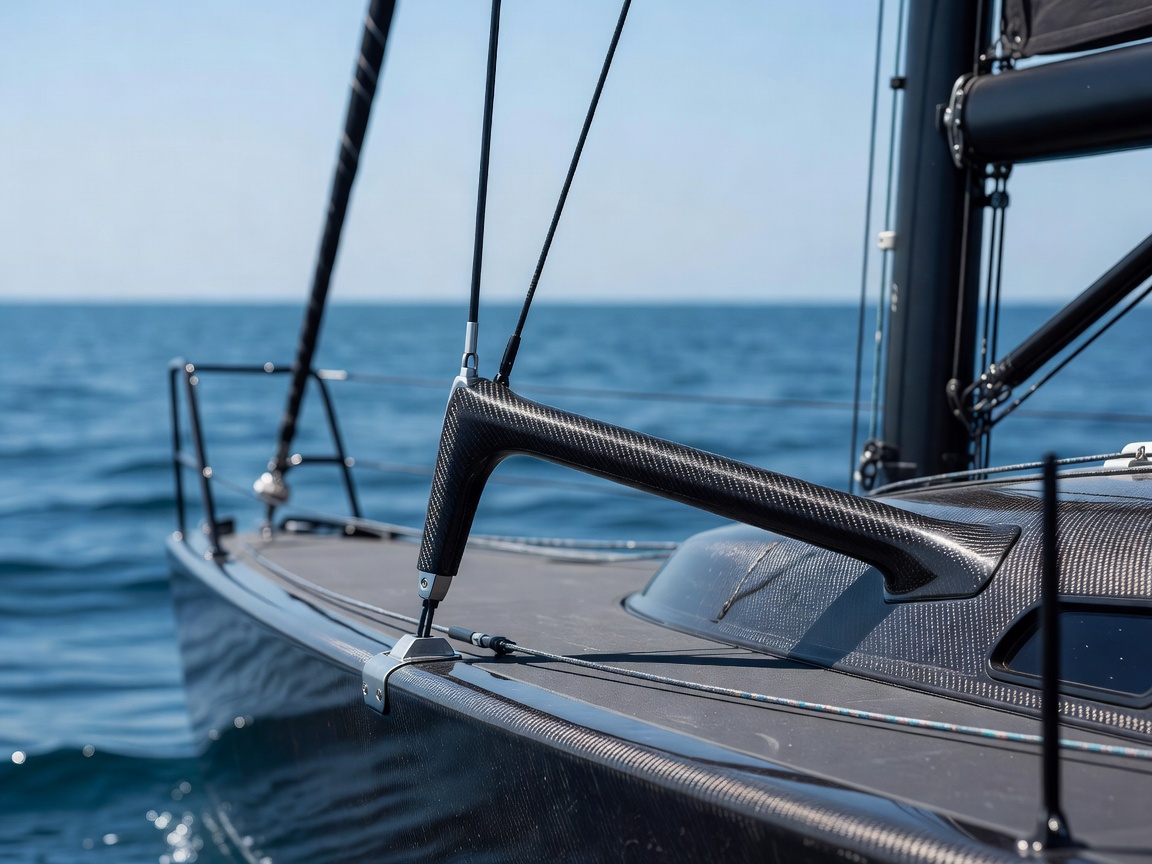
The Transition from Stainless Steel Wire to Carbon Fiber
In modern grand-prix racing and high-performance offshore cruising, continuous carbon fiber standing rigging has replaced stainless steel wire and rod rigging. Carbon offers up to a 70% weight reduction aloft compared to nitronic rod, significantly reducing heel angle, pitching moment, and aerodynamic drag.
However, carbon fiber exhibits almost zero elastic elongation before catastrophic yield. While steel wire shows visible strand fraying or necking prior to failure, composite stays can fail internally with minimal external warning signs if rigorous inspection schedules are ignored.
Core Inspection Intervals & Methods
A complete carbon rigging inspection program involves three tiers of diagnostic checking:
1. Monthly Visual & Tactile Touch Inspections
Run a gloved hand along the full length of cap shrouds, lower shrouds, and forestays. Feel for chafing, outer protective tape unraveling, local swelling, or micro-cracking in the outer varnish matrix.
2. Annual End-Fitting Dismantling
Remove titanium or stainless steel socket end-terminals. Check for galvanic corrosion where metal meets carbon. Carbon fiber is highly noble on the galvanic scale, causing rapid galvanic corrosion of aluminum and standard stainless steel if isolation barriers wear away.
Non-Destructive Testing (NDT) Protocol
Every 30,000 nautical miles or 4 years, perform Ultrasonic A-Scan Diagnostics across high-stress spreader contact zones and masthead tangs to detect internal delamination of carbon tow fibers.
UV Protection & Environmental Defense
Epoxy resin matrices in carbon stays are vulnerable to long-term ultraviolet (UV) radiation degradation. Ensure that all carbon stays are wrapped with specialized UV-resistant DuPont Tedlar or fluoropolymer heat-shrink tubing and coated with polyurethane clear coats containing active UV absorbers.